Scenario Experience

Join CommunityConnect with users →
Join AskTable Community


Feishu
Choose your preferred way to join

Contact UsGet professional support →


Alibaba Cloud OffersScan for offers →

Scenario Experience
Feishu
Choose your preferred way to join
Editor's Note
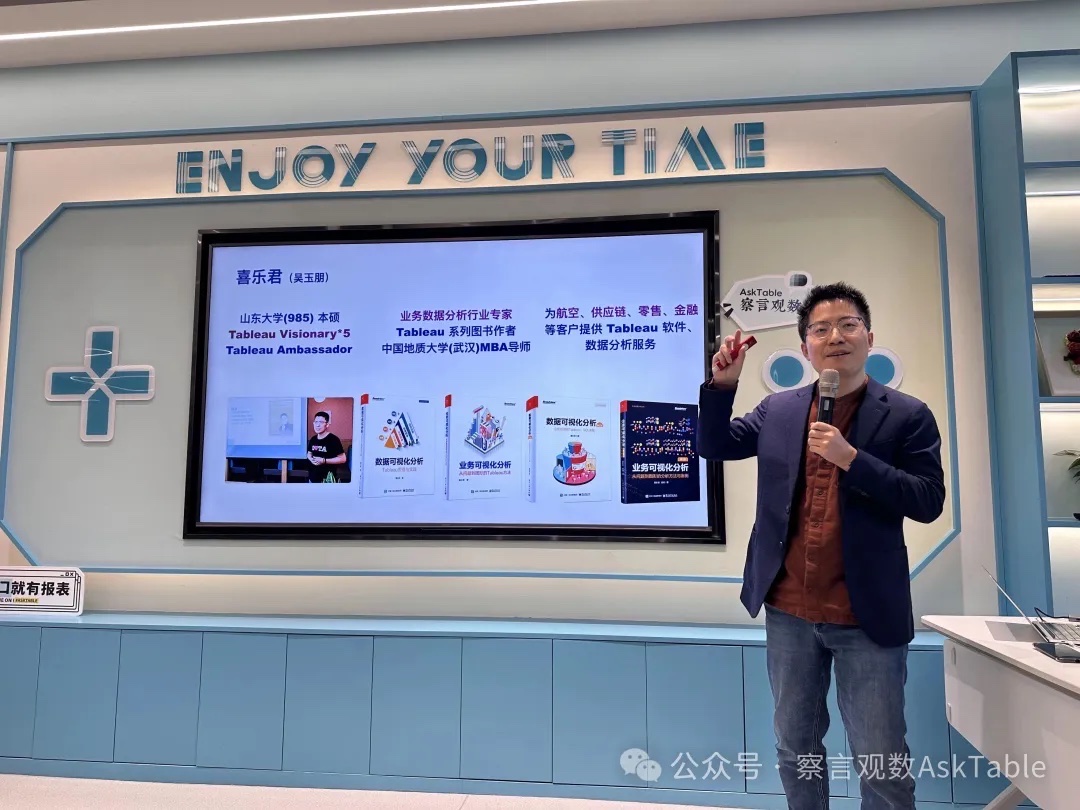
This article is excerpted from Tableau Xilejun's live sharing at the "Using AI Right, Using AI Well - AI Data Insights User Exchange Conference". As the AI wave sweeps through, BI professionals stand at a crossroads. Will they be replaced, or will they evolve? This is not just a technical question, but a proposition about value, thinking, and the future.
Hello everyone.
I'm particularly happy to be here today to chat with you about a topic that is both familiar and unfamiliar:
With AI here, what happens to our BI?
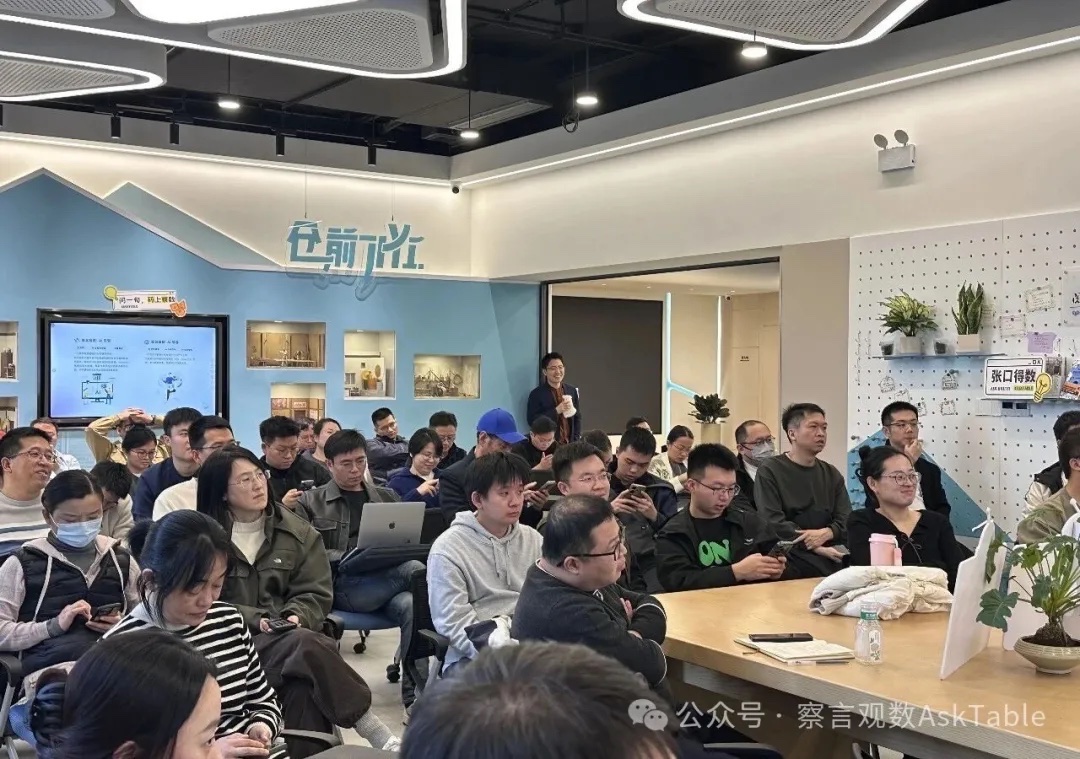
Like many friends, I entered BI through Tableau.
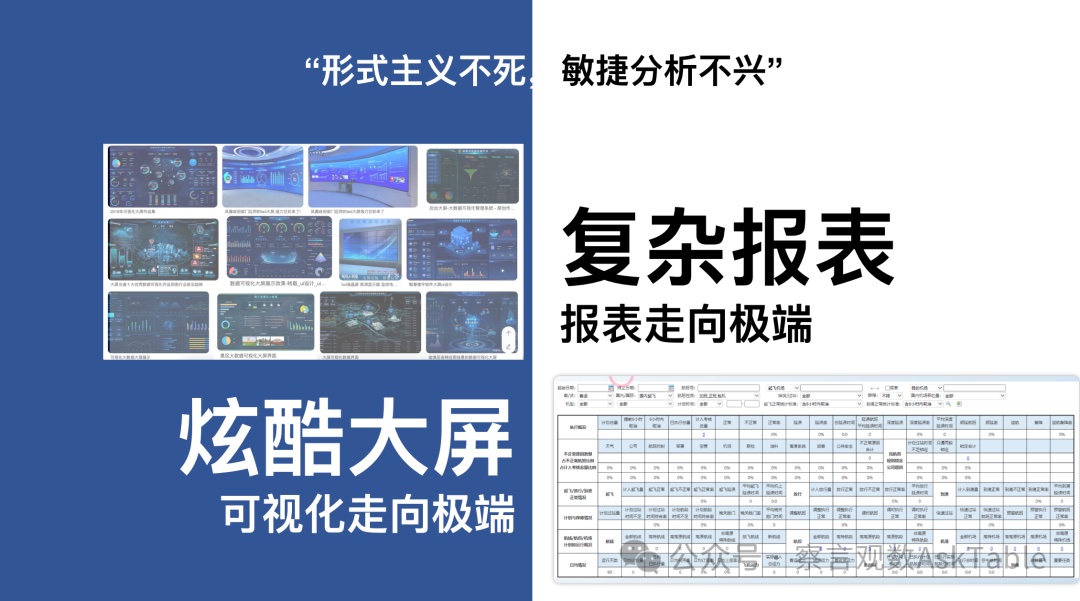
Back then we learned how to use charts to tell stories. Later I also came into contact with many domestic BI systems and found that everyone was pursuing flashy effects but getting further and further from business.
Many enterprises doing BI end up with only "form":
The result is that when the leader asks: "Why did this number change?"
No one can answer.
We often talk about "metrics," but in reality, what metrics are there?
In reality, there are only events and transactions.
Profit margin, conversion rate—these are just our abstractions of reality.
If abstraction separates from reality, analysis becomes illusion.
Someone asked me: "Will AI replace us?"
My answer is:
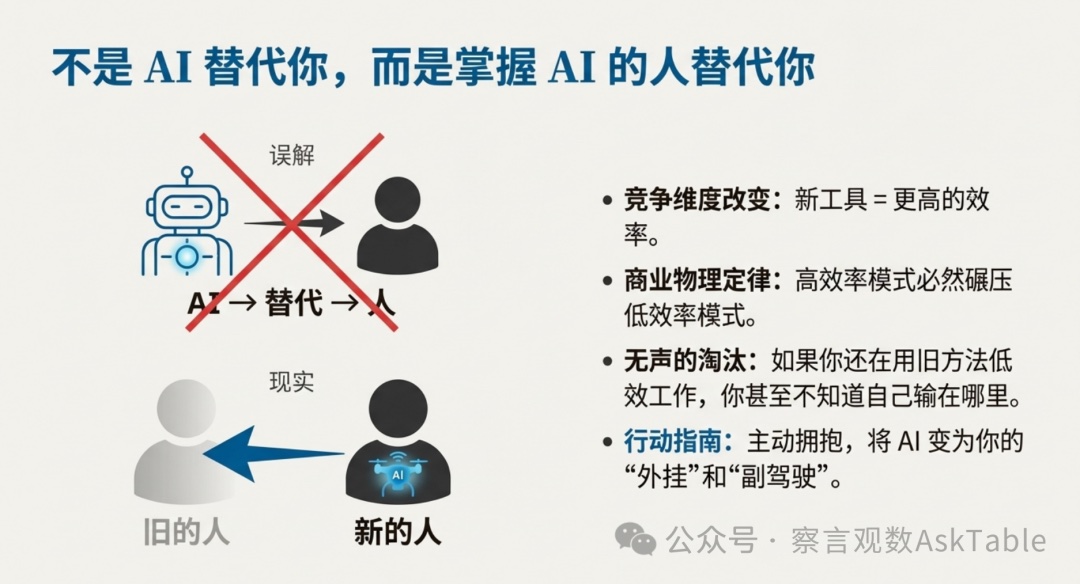
AI won't replace people, but it will replace people who don't know how to use AI.
AI has raised the threshold for the entire industry.
In the past we could make a living relying on Excel and experience; now AI can draw charts and write reports in minutes. It has already won on the formal aspects.
But content, thinking, insights—on this front, AI can't do it yet.
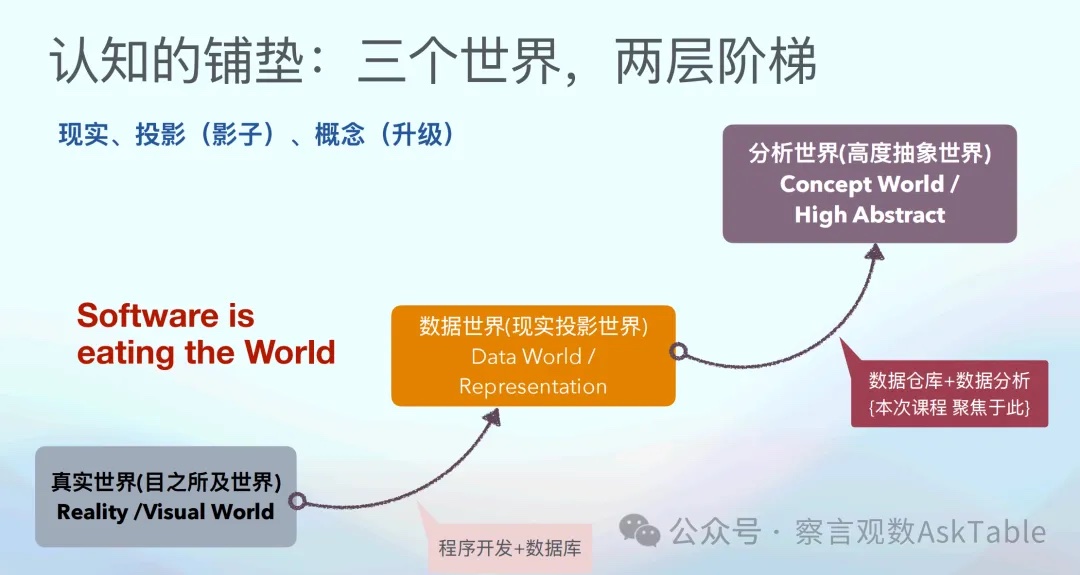
In the past we said "Software is eating the world";
Today we should say "AI is eating software."
It is devouring traditional analysis processes and forcing us to move toward higher ground.
I often divide the enterprise world into three levels:
Where business happens, with people, events, and transactions.
Where business is recorded as information, tables, and databases.
Where we rediscover the patterns of reality in data.
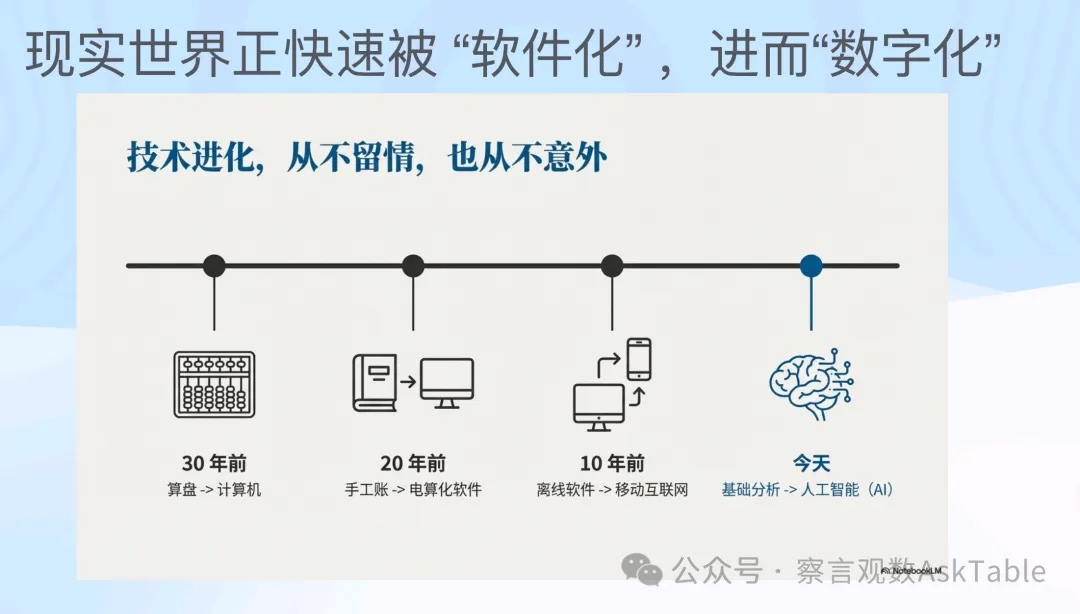
In the past decade or so, enterprises completed the transformation from "reality to data";
In the next decade, we must complete the leap from data to insights.
At this point, AI can become our helper.
It can make data translation automatic and efficient, but on the "why" part, it still needs people—
Needs that person who understands business, understands logic, understands semantics.
A good analyst is not someone who makes reports, but:
That person who can close their eyes and see the factory running.
I have a client with annual revenue in the hundreds of millions, with only one IT person.
Whenever their boss encounters a problem, they call me first: "Teacher Wu, why is this data wrong?"
Actually, I don't need to go to the workshop—I can tell where the problem is just by looking at the numbers.
It's not about controlling everything, but about understanding all the logic.
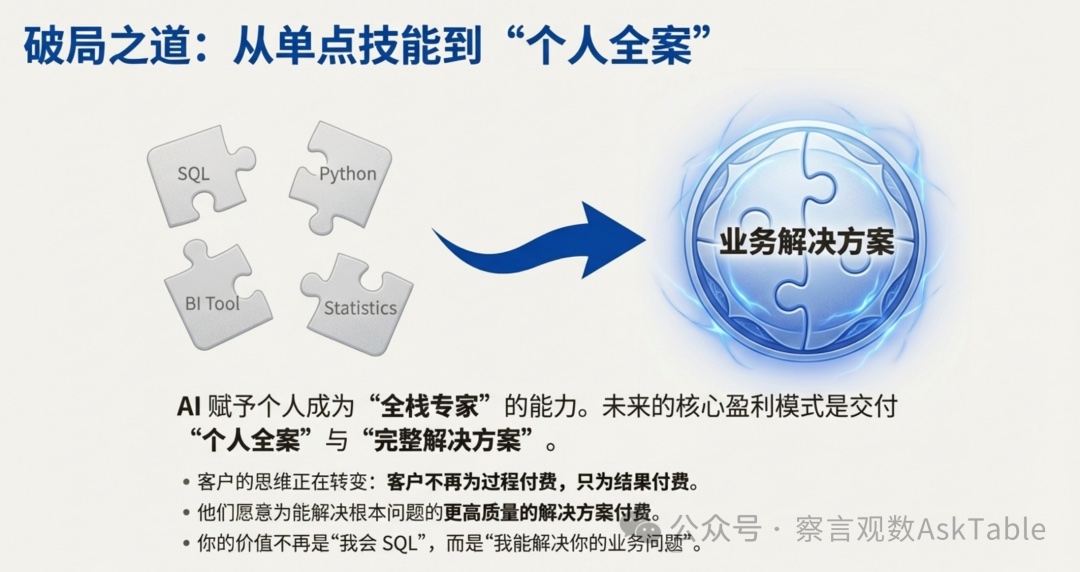
When you can read enterprise processes, understand data structures, and grasp key metrics, you can collaborate with AI instead of being replaced.
Many state-owned enterprises and government projects still linger at the "formalism" stage:
I often joke:
"Your dashboard can be as flashy as it wants, but it's no better than the screen at the bathroom door of Hongqiao Railway Station."
The end of formalism is not beauty, but emptiness.
AI is actually helping us solve this problem—
When machines can automatically generate "form," humans should return to "content."
What we should ask is no longer "how to make the chart look good,"
But: "What does this chart tell me? How should I change it?"
In the past, writing a book took me months.
Now with AI's help, I can write better content in the same time.
When doing client projects, I often use AI to:
AI is not my competitor, but my "intern" that I hired—one that costs 200 yuan per month and never rests.
So don't be afraid of being replaced by AI, be afraid you don't use it.
No matter how powerful the tool, without business, there is no soul.
The competition in BI's future is not about whether you can make reports, but whether you can explain an entire industry.
My current goal is—
To be an analyst who understands both BI and business in the supply chain field.
The insights others accumulate over a decade of experience, I hope to achieve in three to five years with BI.
Everyone should have their own industry map:
From problems → to data → to models → to actions
When this line is connected, you are not just an analyst, but a decision-maker.
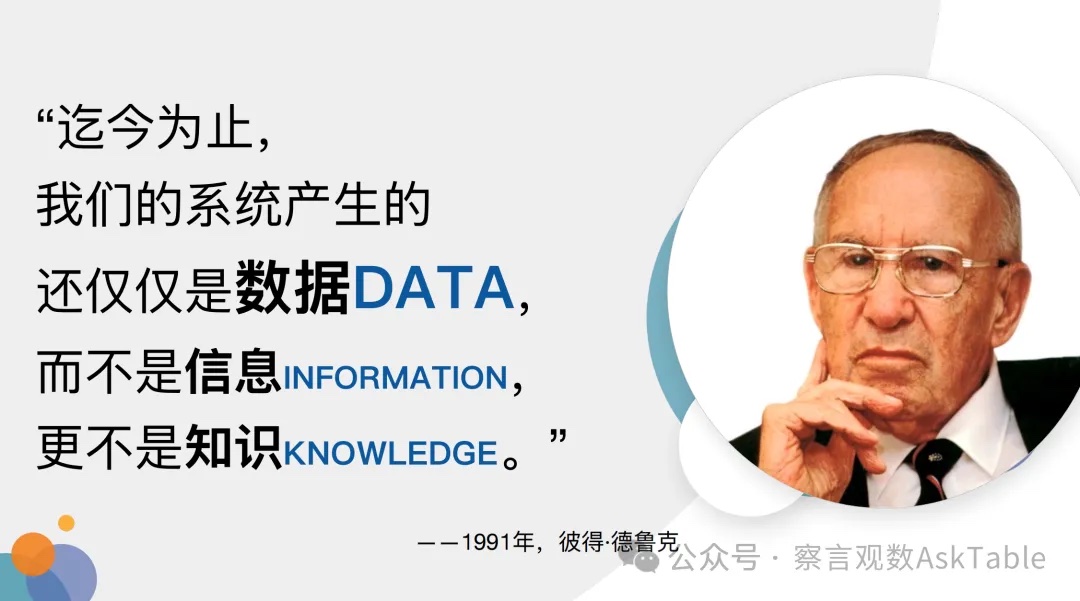
Drucker once said:
What systems produce is often just data, not information, let alone knowledge.
AI can help you generate data and summarize information, but real insights can only come from people.
The future world is not "AI vs. Humans," but:
People who use AI vs. people who don't use AI.
So,
In this decade of AI and BI integration,
I hope we can all win through insights, win through thinking,
And become the "thinking reeds" of this era.
This is the best of times, and also an era full of challenges.
AI is not here to take our jobs, but to help us do better.
The key is:
The leap from data to insights is not a technological leap, but a leap in thinking.
Let's together, in this AI era, become truly insightful analysts.
No coding required. Ask questions in natural language and AI generates SQL queries and visualizations automatically.
Start your free trial now and experience AI-powered data analysis with AskTable.