Scenario Experience

Join CommunityConnect with users →
Join AskTable Community


Feishu
Choose your preferred way to join

Contact UsGet professional support →


Alibaba Cloud OffersScan for offers →

Scenario Experience
Feishu
Choose your preferred way to join
Editor's Note
This article is excerpted from Zhang Xingchen, Data Director at Kingsoft Cloud, at the "Using AI Right, Using AI Well - AI Data Insights User Exchange Conference". Having been deeply engaged in the data analysis field for over a decade, from Excel to Tableau to the AI era, this data expert has witnessed every transformation in the industry.
Hello everyone, I'm Teacher Zhang, also known as Forrest.
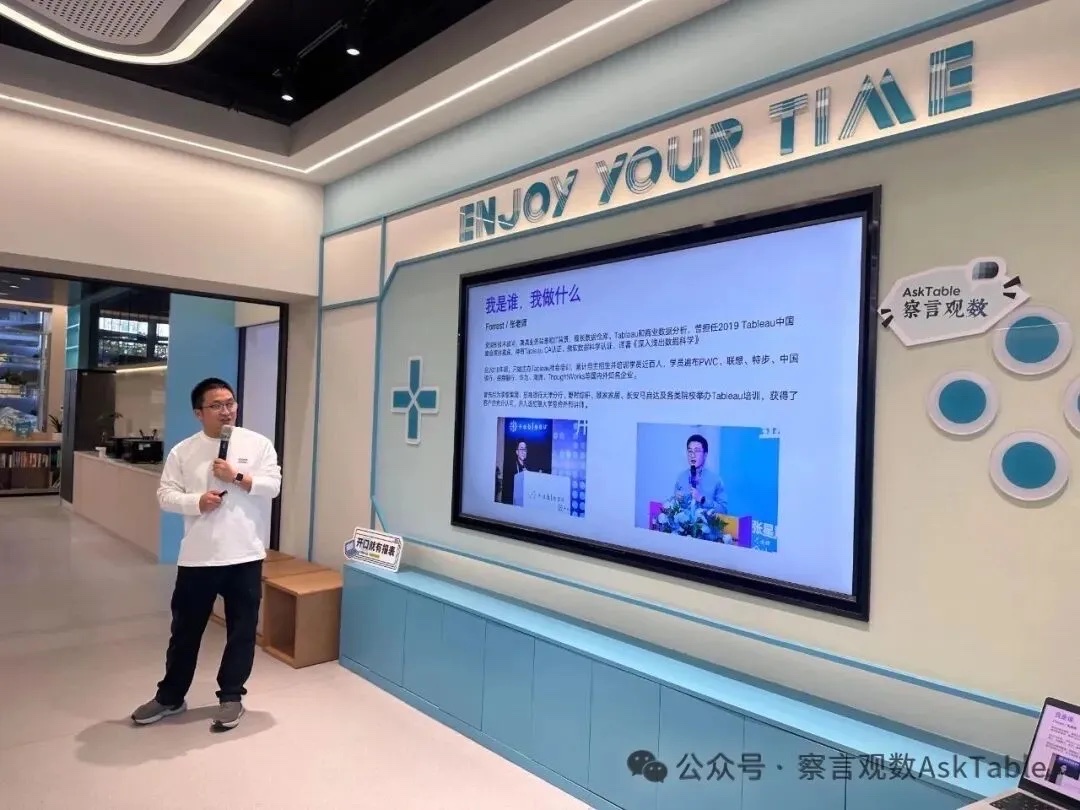
For the past ten-plus years, I've been doing data analysis work, having worked my way through finance, operations, IT, sales and delivery, and even led business departments. Now I head the BI Center at Kingsoft Cloud, mainly responsible for the company's internal data analysis and digital transformation.
Data analysis is very different from traditional system development.
Data only has value when it is truly used by people.
Ten years ago, many companies were struggling with "how to get business to use data," and today this problem still exists. This is also the core proposition I've been thinking about and practicing.
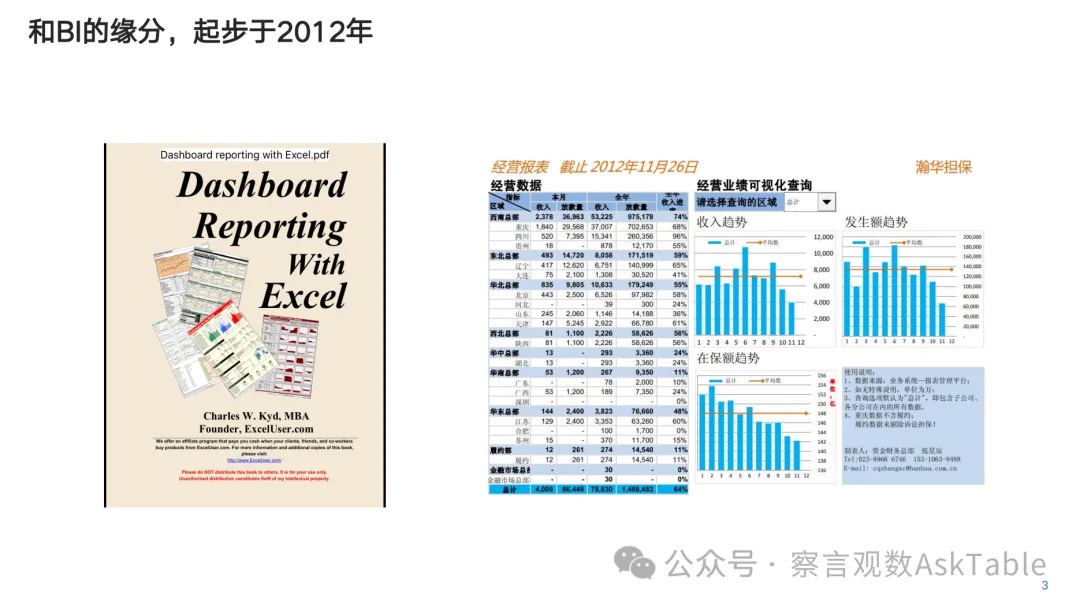
My fate with BI began in 2012.
At that time, I was responsible for data reports at the company, almost dealing with Excel every day, still using Office 2007. Because there was no ready-made tool, I searched online and found an English book 《Dashboard Reporting With Excel》, studied it, and made my first Excel dashboard in a week.
Although I got it done, I wasn't satisfied.
At that time, I was thinking: Is data analysis really just this kind of repetitive work?
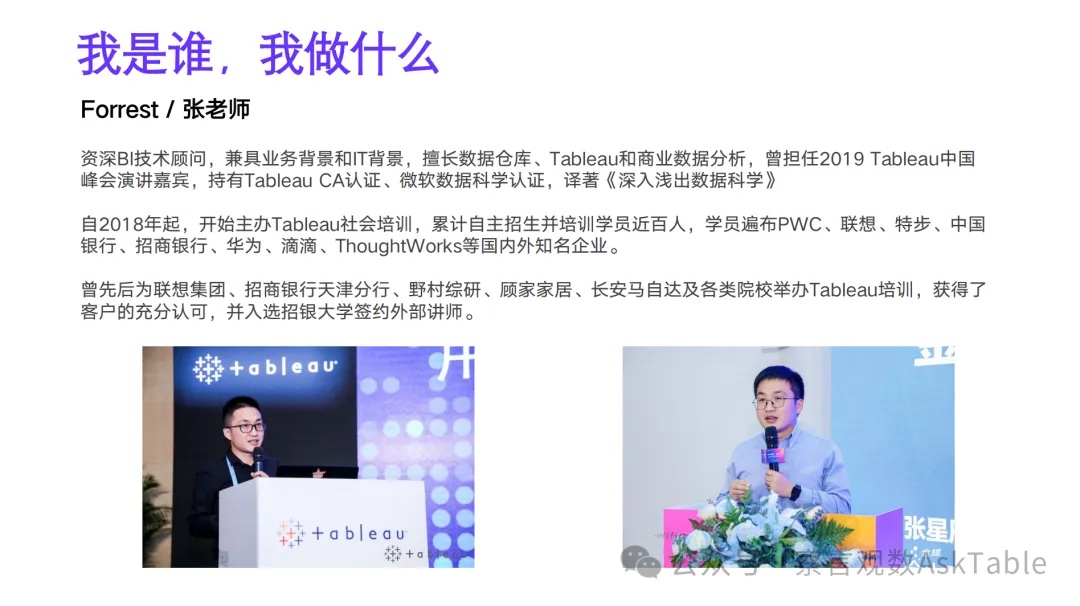
Later, after coming to Beijing, I first encountered Tableau and also attended its Beijing summit.
That summit was a huge shock to me: companies like LinkedIn were using this tool and producing very creative analysis results.
At that moment, I decided to give it a try.
At the beginning, the company's IT department didn't trust this kind of tool, thinking the performance was insufficient. But I firmly believed the direction was correct and insisted on introducing it.
The fact proved that we "bet on the right horse" at that time, and Tableau later became one of the industry leaders.
After joining Kingsoft Cloud, I found that the company's data analysis was still at the Excel stage.
So we established the BI Center, allowing all departments' data needs to find us directly. This habit gradually formed within the group and also gained support from senior management.
Once, we found the company's monthly closing process was complex and time-consuming.
The conventional approach was to spend money introducing SAP modules, but we changed our thinking and built an online Plan using a low-code platform, with me responsible for modeling and the digital team responsible for implementation.
We projected real-time progress data onto the screen in the VP's office, significantly improving project efficiency without spending much money.
"This is not BI in the traditional sense, but a kind of information technology thinking, solving management problems with digital means."
After interacting with many clients, I've found enterprises generally exist in two states:
This shows the problem is not with the tools, but with methods and concepts.
So later I stopped giving public lectures because I realized—
"No amount of training can save an industry not ready to understand the value of data."
Real breakthrough comes from thinking about how to make data analysis more inclusive and intelligent.
Until I encountered AI, I reignited my hope.
Ten years ago, choosing BI required great courage; today, facing AI is the same.
I believe in the next ten years, AI will become a new inflection point in the data field.
In the past we pursued faster and stronger tools; now, AI gives us the opportunity to achieve "tenfold productivity" improvement.
The core principle for judging the next direction is still first principles:
"Whoever can truly transform data into insights is the protagonist of the future."
I really like Christensen's "disruptive innovation" theory.
Many industries' breakthroughs don't come because tools are advanced, but because they lower thresholds.
For example, as mentioned by Procter & Gamble's CIO, the "Siri Moment":
Employees don't need to become experts; they can just use natural language to get the information they need.
The data analysis field also needs such a moment—
No need to understand BI, no need to write SQL; as long as you can ask questions, you get answers.
This is actually my expectation for the future:
"Let every enterprise have its own 'Siri for Data'—anyone can ask, understand, and use data well."
I've always emphasized "inclusiveness".
Let 80% of people who haven't studied BI easily get started—this is real change.
So when I first saw the AskTable product, I was very impressed—
And the name itself represents the concept:
"Everyone has a Table; the key is being able to ask (Ask) for answers."
"Your own table, ask it yourself."
This is the ultimate form of data analysis.
From Excel to Tableau, from BI to AI, this journey of more than a decade has let me deeply understand:
The future is already here; let's witness the next decade of data analysis together.
No coding required. Ask questions in natural language and AI generates SQL queries and visualizations automatically.
Start your free trial now and experience AI-powered data analysis with AskTable.